LogiPharma USA 2026
October 5 - 7, 2026
Sheraton, Boston, MA
Building the Future-Ready Pharma Supply Chain
Monday, October 5th, 2026
7:30 am - 8:30 am
Breakfast & Registration
8:30 am - 8:40 am
Welcome Remarks
8:40 am - 8:50 am
Chairperson's Opening Remarks
8:50 am - 9:10 am
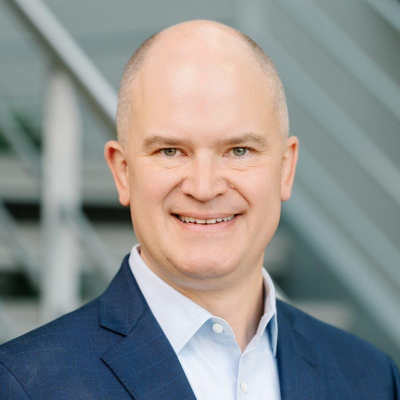
Opening Keynote: Building the Supply Chain of Tomorrow: Turning Capability Into Competitive Advantage
Matt Schumacher -
Head of US Supply Chain,
UCB, Inc.
As supply chains evolve from operational support functions into strategic business differentiators, leaders must rethink how they align capabilities, talent, and cross-functional collaboration to drive competitive advantage. Drawing on his transition from commercial leadership into supply chain, Matt Schumacher will share a fresh perspective on how organizations can better integrate supply chain with commercial strategy, strengthen global collaboration, and build future-ready teams. This keynote will explore how supply chain leaders can translate complexity into strategic value, challenge legacy mindsets, and position supply chain as a core driver of business performance and resilience.
- Learn how to translate supply chain priorities into language and insights that resonate with commercial stakeholders and strengthen Integrated Business Planning and S&OP alignment
- Unlock talent as a strategic asset to explore new approaches to governance, capability development, and knowledge-sharing that maximize the full potential of supply chain talent across global organizations
- Redefine supply chain as a Competitive Advantage and understand how evolving portfolio complexity, network design, and strategic decision-making are shifting supply chain from an operational function to a key differentiator in future pharma performance
9:10 am - 9:40 am
Keynote Panel: Building Resilient Supply Chains at Scale: Preparing for Disruption, Uncertainty & What’s Next
Vickram Srivastava -
Head of Supply Chain Management,
Sun Pharmaceutical
Victoria Wilmore -
Director, External Supply Services,
Johnson & Johnson
From geopolitical disruption and climate risk to demand volatility and therapeutic complexity, today’s pharmaceutical supply chains are being stress-tested in ways few organizations were designed to handle. For large, global manufacturers, resilience is no longer a contingency plan, it is a core leadership mandate. Panelists will share how their organization is strengthening resilience across a complex, global network and moving beyond reactive risk management toward proactive preparedness. The conversation will explore how leaders are identifying vulnerabilities, building flexibility into operating models, and making deliberate trade-offs between efficiency, redundancy, and responsiveness to ensure continuity of supply and patient access. Rather than focusing on individual tools or initiatives, this session centers on the leadership decisions, governance models, and cultural shifts required to embed resilience into everyday operations—so organizations are better equipped not just to respond to disruption, but to absorb it and emerge stronger.
- Redefine resilience beyond risk mitigation to include adaptability, continuity, and long-term performance
- Identify where to build flexibility, buffers, and optionality across global supply networks
- Balance efficiency, cost, and resilience in an environment of persistent uncertainty
- Lead organizational and cultural shifts that make resilience a sustained capability, not a one-time response


9:40 am - 10:00 am
Partner Keynote: Topic TBA
10:00 am - 10:40 am
Morning Networking Break in the LogiLounge
INNOVATION THEATER PRESENTATION (10-minutes)
INNOVATION THEATER PRESENTATION (10-minutes)
* The LogiLounge Innovation Theater is a series of fast-paced, 10-minute mini presentations hosted in the exhibit hall during networking breaks. These sessions spotlight real-world success stories and practical innovations shaping the future of pharma supply chains. Designed for quick inspiration and easy drop-in attendance, each presentation highlights a focused challenge, the solution implemented, and the tangible results achieved—giving attendees actionable ideas they can take back to their organizations. With casual theater seating, popcorn, and refreshments, the Innovation Theater offers a relaxed environment to learn, connect, and spark new conversations between sessions.
10:40 am - 11:10 am
Keynote Panel: Building a Truly End-to-End Supply Chain: Visibility, Operating Models & Cross-Functional Alignment for 2026 and Beyond
Krenar Komoni -
Founder, CEO,
Tive
Anthony Adetayo -
Head of Supply Chain Operations, Americas and Asia Pacific,
Organon
In an era defined by volatility, complexity, and rising expectations for resilience and service, visibility has emerged as the critical foundation of a truly end-to-end supply chain. Yet for many pharma organizations, visibility remains fragmented and trapped within functions, systems, or partners, limiting its impact on real decision-making and execution. This keynote panel brings together senior supply chain and operations leaders to explore how they are elevating visibility from a monitoring capability to a strategic enabler of integrated operating models. Panelists will discuss how real-time, shared visibility across planning, manufacturing, and distribution is reshaping how decisions are made, how teams collaborate, and how organizations respond to disruption. The conversation will focus on how leading companies are using visibility to break down silos, align functions, and drive faster, more confident, and more patient-centric outcomes across the value chain.
- Move from fragmented tracking to shared, real-time visibility that supports end-to-end decision-making
- Use visibility to redesign operating models, reduce latency, and improve cross-functional alignment
- Translate visibility into action through clearer governance, accountability, and execution pathways


11:10 am - 11:30 am
Fireside Chat: Planning for the Unknown: What Clinical Supply Chains Teach Us About Resilience and Execution
Clinical supply chains operate in an environment where uncertainty is constant: changing protocols, unpredictable enrollment, tight timelines, and zero tolerance for patient impact. In many ways, they represent the most extreme version of the challenges now facing commercial supply chains. In this fireside chat, a senior clinical supply chain leader shares how their organization plans, executes, and adapts when demand signals are fluid and risk is unavoidable. The discussion will explore how capabilities developed in clinical operations, such as scenario planning, real-time visibility, and rapid decision-making can inform broader enterprise supply chain strategies. This conversation will challenge attendees to rethink how they plan for uncertainty and what commercial supply chains can learn from clinical environments where “perfect data” rarely exists.
- Learn how clinical supply chains manage uncertainty as a core operating condition, not an exception
- Hear what commercial supply chains can adopt from clinical approaches to planning, visibility, and risk management
- Discover how patient-centric decision-making reshapes priorities around speed, resilience, and execution
11:30 am - 12:30 pm
Roundtables
Join a candid, small-group discussion with fellow supply chain leaders to exchange practical solutions, pressure-test ideas, and tackle the challenges that don’t get solved in large sessions. These off-the-record conversations are consistently one of the most anticipated moments of the event. You’re in control of the experience. Choose the two roundtable topics that will have the greatest impact on your 2026 supply chain priorities and walk away with insights you can put into action.
(Choose 2, 30 minutes each).
Roundtable #1 – Moderated by CSafe
Roundtable #2 – Moderated by Gather AI
Roundtable #3 – Reserved for Sponsor + Pharma Customer
Roundtable #4 – Reserved for Sponsor + Pharma Customer
Roundtable #6 – Reserved for Sponsor + Pharma Customer
Roundtable #7 – Reserved for Sponsor + Pharma Customer
Roundtable #8 – Reserved for Sponsor + Pharma Customer
Sponsored by: Sensitech

Sponsored by: FedEx

MASTERCLASSES
Navigating Logistics Success is where we delve into the complex world of supply chain management through a stakeholder-centric lens. This workshop will explore how aligning logistics strategies with stakeholder goals can pave the way for organizational excellence. Against the backdrop of evolving market dynamics and increasing customer demands, logistics professionals are tasked with orchestrating complex operations while meeting stakeholder expectations. Success hinges on our ability to engage stakeholders effectively, align logistics strategies with their goals, and drive sustainable value across the supply chain. This workshop combines a comprehensive approach to stakeholder management, drawing on concepts from both the corporate and startup environments. By bridging the gap between theory and practice, we explore practical strategies for aligning logistics strategies with stakeholder goals.
- Dive deep into the nuances of stakeholder engagement, exploring strategies to boost meaningful relationships and drive satisfaction
- Understand the customer-centric delivery models and learn how to leverage insights to enhance stakeholder experiences with various tools
- Encourage quick adaptation and risk-taking thresholds from your main stakeholders
- Guide and support C-Suite & Mid-Level Managers to create innovation

Athanasios Fourtounas
Assistant Professor, Senior Trainer of Human Asset S.A.University of York Europe Campus

Sponsored by: Peli BioThermal

In times of uncertainty, confidence is often the first casualty. In this empowering, interactive masterclass, author and life sciences leader Stephanie Joong guides participants through the process of recognizing self-limiting narratives, restoring authentic self-worth, and transforming professional setbacks into sources of strength. Drawing on over 15 years of experience in the life sciences industry—and her work amplifying underrepresented voices—Stephanie helps attendees reconnect with their inner resilience, rewrite their stories, and step forward with clarity and confidence. After completion of this workshop, attendees will be able to:
- Recognize outdated narratives that contribute to self-doubt and hold you back during times of disruption
- Restore self-worth and reconnect with your true sense of self, rather than living by others’ expectations.
- Build resilience by rewriting your story—transforming setbacks into lessons that help you rise stronger and more confident.

Sponsored by: PAXAFE

- Build a shared understanding of DtP quality & stability requirements
- Map risks across DtP dispensing pathways
- Define what transparency should mean for the patient
- Identify innovation opportunities for packaging, digital tools, and logistics

Sponsored by: Revenew

Sponsored by: Transvoyant

3:10 pm - 3:50 pm
Afternoon Networking Break In The LogiLounge
INNOVATION THEATER PRESENTATION
INNOVATION THEATER PRESENTATION
The LogiLounge Innovation Theater is a series of fast-paced, 10-minute mini presentations hosted in the exhibit hall during networking breaks. These sessions spotlight real-world success stories and practical innovations shaping the future of pharma supply chains. Designed for quick inspiration and easy drop-in attendance, each presentation highlights a focused challenge, the solution implemented, and the tangible results achieved—giving attendees actionable ideas they can take back to their organizations. With casual theater seating, popcorn, and refreshments, the Innovation Theater offers a relaxed environment to learn, connect, and spark new conversations between sessions.
Track A: End-to-End Supply Chain Execution & Operating Model Transformation
3:50 pm - 4:00 pm Chairperson's Opening RemarksTrack A: End-to-End Supply Chain Execution & Operating Model Transformation
4:00 pm - 4:30 pm Panel: From Strategy to Shop Floor: Turning Supply Chain Transformation into Measurable ExecutionAs pharma organizations invest heavily in digital tools, network redesign, and advanced analytics, many still struggle to translate transformation strategies into consistent, day-to-day execution. This panel focuses on how operational leaders are closing the gap between ambition and reality—ensuring new processes, technologies, and governance models actually work at the plant, warehouse, and distribution levels. Senior supply chain and operations leaders will share how they are driving adoption, managing change, aligning KPIs, and embedding continuous improvement across manufacturing, logistics, and quality teams—without slowing execution or overwhelming the organization.
Key Takeaways
- Convert transformation roadmaps into executable operating plans with clear ownership and metrics
- Drive adoption on the front lines through change management, capability building, and realistic timelines
- Balance standardization and flexibility across sites, regions, and partners to improve performance at scale
Track A: End-to-End Supply Chain Execution & Operating Model Transformation
4:30 pm - 4:50 pm Partner Presentation: Orchestration in Action: Turning Visibility into Faster, Smarter ExecutionVisibility alone does not drive performance, execution does. In this partner-led session, we examine how leading pharma organizations are using orchestration to convert real-time visibility into coordinated action across manufacturing, logistics, and distribution. The presentation focuses on how teams prioritize exceptions, synchronize cross-functional responses, and accelerate execution once disruptions occur, moving beyond passive dashboards to active operational control. Through real-world examples, the session highlights how orchestration platforms enable faster decisions, clearer accountability, and more consistent execution across increasingly complex supply networks.
- Translate visibility into action by using orchestration to prioritize exceptions and coordinate cross-functional execution in real time
- Accelerate response and reduce disruption impact through automated workflows, decision support, and clear ownership
- Improve service, resilience, and execution consistency by aligning teams around shared data and operational triggers
Track A: End-to-End Supply Chain Execution & Operating Model Transformation
4:50 pm - 5:10 pm Use Case: Increasing Industry Collaboration as a Method to Lower Costs and Boost Efficiency: A Business Case from Bayer Consumer Health Brazil Luiz Barberini - Operations Manager, External Manufacturing LATAM, BayerIn this practical use case, Luiz Barberini shares how Bayer Consumer Health Brazil explored and implemented greater collaboration with suppliers, vendors, and CMOs to reduce costs, improve operational efficiency, and lower environmental impact. The session highlights how shared practices and closer partnerships were used to streamline logistics operations for pharmaceutical products, as well as the role external partners played in enabling collaboration across the supply chain. The speaker will also address the limitations of collaboration, where sharing resources does not work, and the importance of trust, governance, and clear boundaries in making collaborative models successful.
- Explore opportunities to build collaborative relationships with suppliers to reduce costs and environmental impact
- Share practices as a method to streamline logistical operations for pharmaceutical products
- Access the role of vendors and CMOs in increasing collaboration across industry

Track B: Quality, Compliance & Risk Management in a Changing World
3:50 pm - 4:00 pm Chairperson's Opening RemarksTrack B: Quality, Compliance & Risk Management in a Changing World
4:00 pm - 4:30 pm Panel: Strengthening Quality & Compliance Risk in a Volatile Global Supply ChainIn an era of rapid regulatory change, increasing supply constraints, multi-tier supplier complexity, and mounting geopolitical risk, quality and compliance teams are under unprecedented pressure to safeguard product integrity while enabling speed and innovation. This discussion focuses specifically on quality, regulatory, and supplier risk and how QA-led teams are evolving their systems to support faster, more resilient operations.
- Elevate supplier risk and quality assurance through stronger qualification and monitoring
- Adapt to new global regulations by harmonizing compliance frameworks and strengthening audit readiness
- Enhance business continuity through predictive risk sensing and proactive quality system evolution
Track B: Quality, Compliance & Risk Management in a Changing World
4:30 pm - 4:50 pm Partner Presentation: Modern Quality & Compliance: Leveraging Digital Tools for Supplier Assurance, Audit Readiness & Risk VisibilityAs global networks expand and regulatory expectations intensify, traditional quality systems are struggling to keep pace. This session highlights how digital quality and risk platforms can help pharma organizations proactively manage supplier performance, automate compliance activities, and gain real-time visibility into potential risks. Through practical examples and customer success stories, the session will explore how organizations can streamline audits, improve data integrity, and move from reactive issue resolution to predictive quality.
- Streamline compliance and audit preparation with digitalized workflows and automated documentation.
- Strengthen supplier assurance using real-time performance data and centralized risk monitoring
- Reduce quality and compliance risk by leveraging predictive insights to detect issues earlier
Track B: Quality, Compliance & Risk Management in a Changing World
4:50 pm - 5:10 pm Use Case: Transforming GDP Practices: New Strategies for Handling Temperature Excursions Resulting in Timely Product Release for Market Distribution Anca Niebergall - Head, Quality Assurance, Supply Chain, Astellas PharmaManaging temperature excursions remains one of the most complex and time-sensitive challenges in pharmaceutical distribution, with direct implications for product quality, supply continuity, and speed to market. In this use case, Astellas shares how enhancements to its TrackWise Digital system—combined with the introduction of Mean Kinetic Temperature (MKT) for assessing minor excursions—have enabled more consistent, data-driven decision-making.
- Position Quality Assurance as a strategic partner to the supply chain by enabling risk-based, data-driven decisions that protect product quality while supporting supply reliability and financial performance
- Embed continuous improvement into GDP operations by standardizing best practices and elevating the distribution network as a center of operational excellence
- Align digital innovation with global GDP requirements to accelerate product release timelines and deliver greater impact to market

Track C: Supply Chain Planning
3:50 pm - 4:00 pm Chairperson's Opening RemarksTrack C: Supply Chain Planning
4:00 pm - 4:30 pm Panel: Reimagining Supply Chain Planning: From Forecast Accuracy to Decision Advantage Pete Debrot - Head of US Supply Chain, NovartisIn today’s volatile, disruption-prone environment, traditional planning models built around static forecasts and siloed functions are no longer sufficient. This panel brings together senior supply chain planning leaders to explore how organizations are evolving demand, supply, and inventory planning into a more dynamic, end-to-end decision engine. Panelists will discuss how they are enabling faster scenario analysis, improving cross- functional alignment, leveraging AI and advanced analytics responsibly, and shifting planning from a back-office function to a strategic capability that drives resilience, agility, and business outcomes. Rather than focusing on execution or compliance, this session zeroes in on how better planning decisions are made upstream and how those decisions shape everything that follows.
- Design planning processes that support rapid scenario modeling and decision-making, not just forecast accuracy, in the face of ongoing disruption and uncertainty
- Integrate demand, supply, and inventory planning into a cohesive end-to-end planning cadence that improves tradeoff decisions and cross-functional alignment
- Understand where AI and advanced analytics are truly adding value in planning today, and where human judgment remains critical to effective decision-making

Track C: Supply Chain Planning
4:30 pm - 4:50 pm Partner Presentation: Enabling Scenario Planning That Drives Action: Turning Disruption into Better Planning DecisionsAs disruption becomes a constant rather than an exception, many supply chain planning teams struggle to move from theoretical scenario modeling to practical decision support. In this partner-led session, we explore how leading pharma organizations are enabling scenario planning that actually gets used, not just built. The presentation will highlight common pitfalls that cause scenario models to be ignored, and demonstrate how modern planning platforms and decision frameworks help teams prioritize high-impact disruptions, rapidly assess tradeoffs, and embed scenario insights into everyday planning workflows. Using anonymized customer examples and real-world planning challenges, this session focuses on how technology, governance, and process design come together to transform scenario planning from an academic exercise into a reliable decision-making capability.
- Enable scenario planning that supports real decisions by focusing on a manageable set of high-impact disruptions and clearly defined business questions
- Embed scenario analysis into existing planning cadences and workflows, allowing teams to assess impact and respond quickly as conditions change
- Operationalize scenario outputs through triggers, thresholds, and governance, ensuring insights translate into action rather than sitting unused
Track C: Supply Chain Planning
4:50 pm - 5:10 pm Use Case: Applying Clinical-Grade Scenario Planning to Strengthen Commercial Supply ChainsClinical supply chains rely on advanced scenario modeling, predictive planning, and rapid re-forecasting to keep pace with constant change. In this use case, attendees will see how clinical planning techniques and digital tools are being adapted to improve resilience and responsiveness across commercial supply chains. This session will walk through how organizations are leveraging real-time data, scenario simulations, and cross-functional alignment to anticipate disruption, evaluate tradeoffs, and execute with greater confidence.
- Apply scenario modeling techniques used in clinical supply chains to anticipate disruption in commercial operations
- Use real-time data and predictive insights to improve planning confidence and execution speed
- Translate clinical planning rigor into scalable, enterprise-wide decision-making frameworks
Workshops & Boardrooms
3:50 pm - 4:00 pm Private Workshop Check In & WelcomeWorkshops & Boardrooms
4:00 pm - 4:30 pm Private WorkshopSponsored by: SkyCell

AI continues to dominate supply chain conversations, but separating hype from real, measurable impact remains a challenge. This rapid-fire use case showcase brings together pharma leaders who are applying AI in meaningful, operational ways across forecasting, planning, exception detection, quality automation, and more. Each panelist will walk through a concrete example of AI implementation, sharing the problem they set out to solve, what worked (and what didn’t), the measurable outcomes they achieved, and one visual “show-and-tell” takeaway attendees can apply immediately. This is a practical, candid look at AI that moves beyond buzzwords and into real execution.
- Evaluate AI opportunities by grounding them in real operational pain points, measurable business cases, and clear success criteria
- Apply lessons from live implementations, including pitfalls, scalability challenges, and change-management needs, to strengthen your own AI roadmap
- Leverage proven AI use cases and visual takeaways to accelerate forecasting accuracy, streamline planning, and enhance exception-management performance

Sponsored by: Project44

5:50 pm - 6:50 pm
Cocktail Reception in the LogiLounge🍸
6:50 pm - 6:50 pm
Private Dinner
Sponsored by: Tobin Scientific